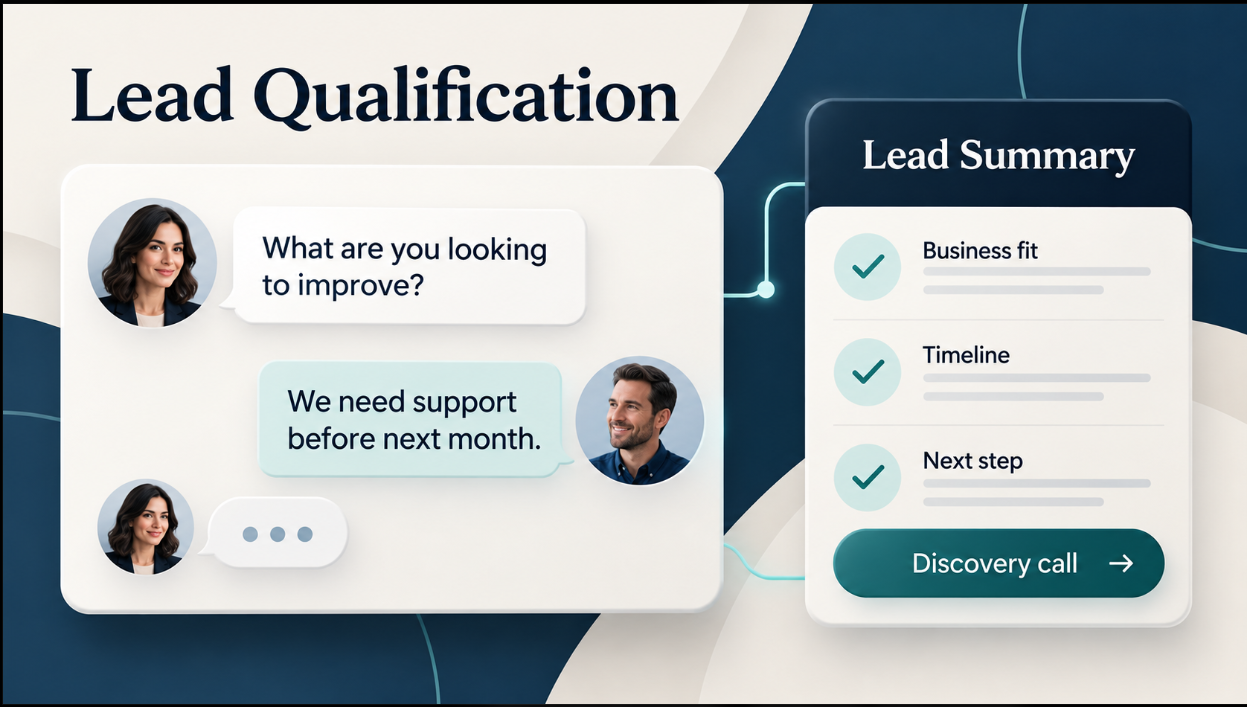
A potential customer may need time to compare options, gather information, or coordinate with colleagues. If follow-up depends entirely on memory, useful conversations can be missed; if it is automated without context, messages can feel impersonal.
A sound rhythm balances consistency with a clear reason to contact the person again.
A practical perspective
Capture the reason for the next contact
At the end of each conversation, confirm what information is still needed and whether the customer wants a follow-up. Record the agreed action and timing rather than relying on a generic reminder.
Store only relevant information in the appropriate system and ensure access follows the business’s data-handling practices.
A practical perspective
Set ownership and a workable cadence
Make one person or role responsible for the next step. A simple cadence may include an agreed follow-up, a useful update when new information is available, and a clear close-the-loop message if there is no response.
The number and spacing of contacts should fit the service, customer preference, and any applicable communication rules. More messages are not automatically better.
A practical perspective
Make every touch useful
Share a relevant answer, requested detail, or a concise reminder of the discussion. Avoid pretending to have personal knowledge that is not in the record or implying urgency that does not exist.
When someone declines or asks not to be contacted, record and honor that preference across the channels the team uses.
Put the insight to work
Practical next steps
- 01
Define the hand-off
Agree where sales conversations are recorded and which role owns follow-up.
- 02
Record customer preferences
Capture the requested channel, timing, and any explicit contact limits.
- 03
Use meaningful reminders
Base follow-ups on the conversation and a useful next step, not a generic sequence alone.
- 04
Review missed commitments
Check whether agreed callbacks happen and adjust workload or ownership when they do not.
Key takeaways
Keep the next decision clear.
- Follow-up should continue a real conversation, not interrupt it with generic messages.
- Assign an owner and record the customer’s preferred next step.
- Honor communication preferences and applicable contact requirements.